MilkClimate

Milk composition responses amplify economic damages from heat stress

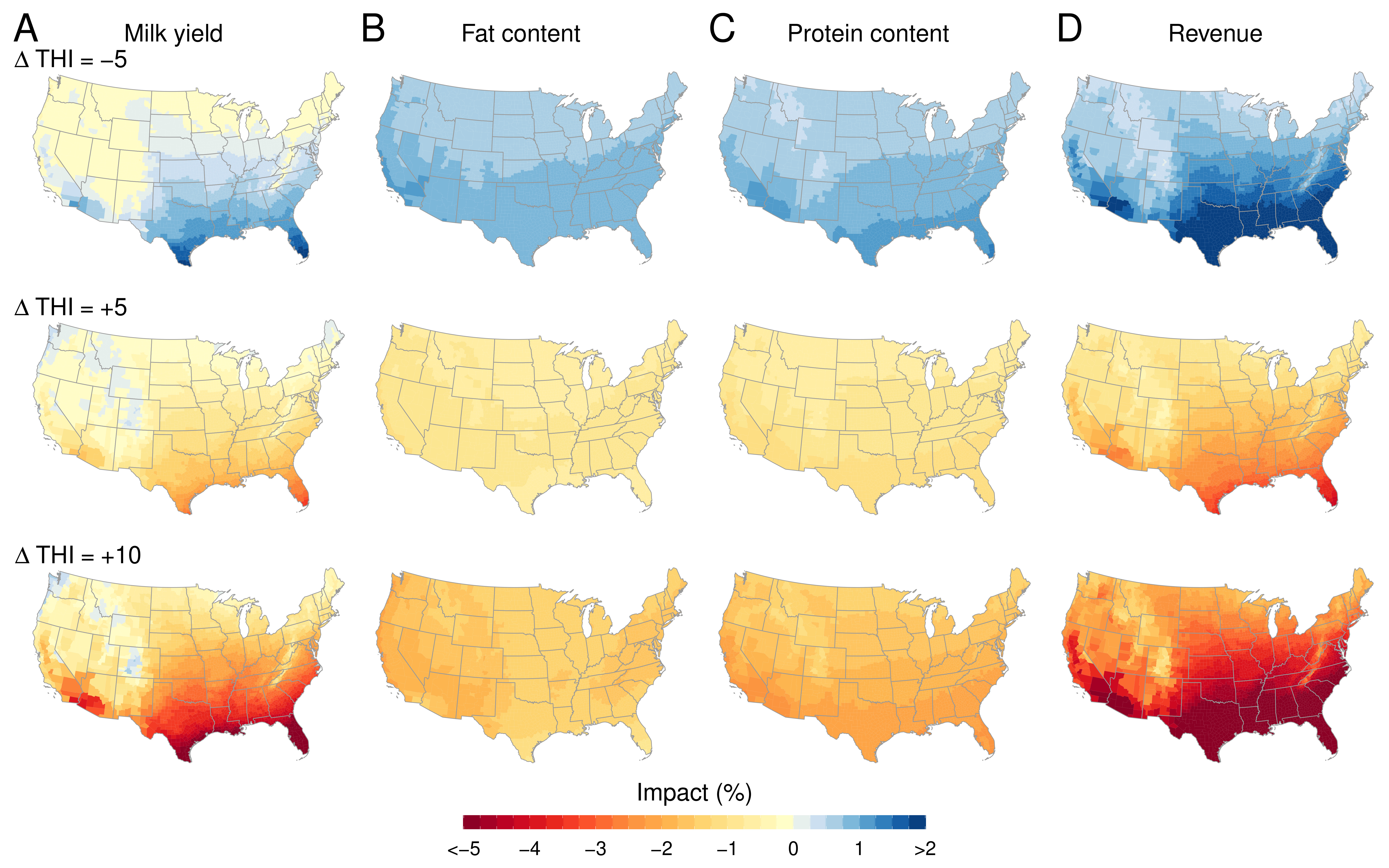
Studies analyzing the impact of climate change on agriculture mostly emphasize effects on production quantity, overlooking potential impacts on quality and nutritional content. We explore this question in the context of U.S. milk production which represents about 20% of national animal products. We link individual lactation records for over 6.5 million cows over 2007-2016 with high-resolution weather data to estimate the nonlinear effects of heat on both milk yield and quality (composition in fat and protein). While milk yield declines sharply only when the Temperature-Humidity Index (THI) exceeds 70 (primarily in the summer), milk quality decreases steadily with rising THI (throughout the year). Combining these findings indicates that estimates of heat damages that ignore quality effects –common in the literature– underestimate total economic losses by at least a factor of two. We also find that the sensitivity of both milk yield and quality to heat varies little with cow age, farm size, region of the country, or period in the sample, suggesting there has been little progress in adapting U.S. dairy systems to a warming climate.

Jeisson Prieto, Ziyi Lin, Kristan F. Reed, Christopher A. Wolf, Ariel Ortiz-Bobea · Revisions requested - Environmental Research Letters (ERL)
TechnologyAdoption

According to whom? Spousal, household and plot differences in improved cassava variety adoption in Nigeria
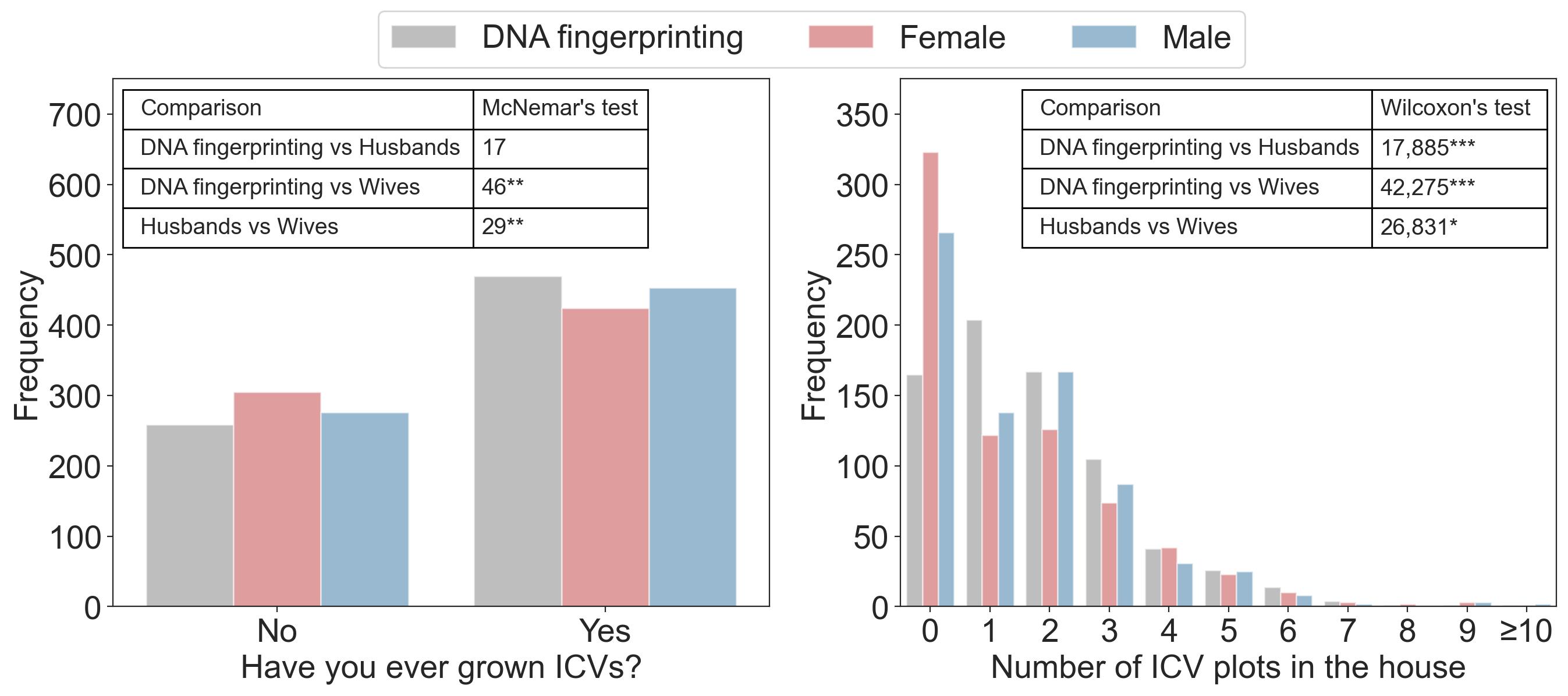
Accurately measuring agricultural technology adoption rates underpins impact claims made for new technologies. While numerous studies have documented gender-based differences in adoption of agricultural technologies, there remains an urgent need to understand how study design and respondent selection within households shape these reported differences. We explore the case of improved cassava varieties (ICV) in Nigeria to examine differences in reporting on varietal adoption rates based on sampling method, level of analysis, and household position. We compare intrahousehold (spousal), household and plot level data for self-reported rates of ICV adoption and compare these and to data from DNA fingerprinting using McNemar’s test for the binary response and Wilcoxon signed-rank test for the count number and Probit and negative binomial models. We identify significant disparities in reported rates of ICV adoption at the household, spousal and plot levels, most of which were different from DNA fingerprinting data collected from respondents’ plots. Our findings shed light on the importance of participant selection in varietal adoption studies and raise question around self-reported adoption rates in the literature. Varietal adoption rates are used to measure a breeding program’s success and impact. However, this study shows that estimated rates can differ significantly depending on adoption study design – including unit of analysis, selection of data source, and how the questions are asked. We call for more data feminism around crop varietal adoption studies, study designs that minimize bias, expanded design standards to include multiple respondents within each household, and multiple data analysis methods that reflect the plurality of experiences with adoption amongst farmers.